Key points
- Never pour grease down the drain. The EPA and NYC DEP both say so.
- Strain warm fat through a fine mesh and keep it under a lid.
- Keep the fat in the fridge if you will not use it within days.
- Throw spent grease out in a carton or a frozen bag, and wipe pans with a paper towel before washing.
Why the drain is the wrong place
Hot bacon fat pours like oil, so the sink looks like the easy answer. It does not stay liquid for long. As it cools it thickens, and the NYC Department of Environmental Protection warns that grease poured down your kitchen sink can cling to the inside of your household plumbing.
If your house runs on a septic tank, the EPA says the same thing in its guide to septic care: never pour cooking oil or grease down the drain. Its list of things to keep out of the drain names fats, butter, wax, cheese and heavy cream, along with oils and coffee grounds.
So the fat needs somewhere else to go. You have two good options, a keeper you cook from and a container you throw away, and most kitchens use both.
Strain it while it is still warm
Bacon fat is easiest to handle a few minutes after cooking. Straight from the pan it is hot enough to burn your hand, and once it sets it no longer pours. Take the pan off the heat, let it rest, then pour while the fat is still liquid.
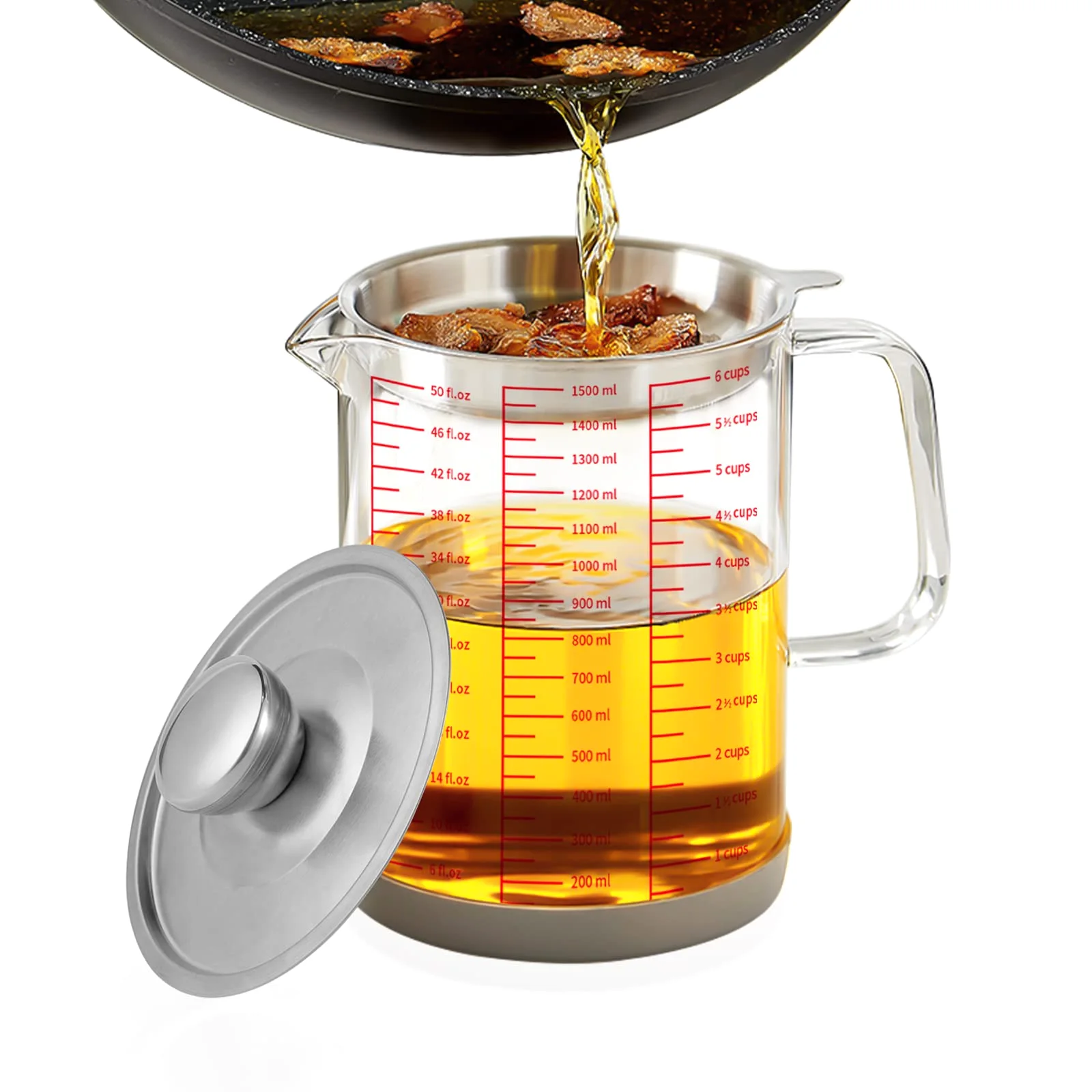
Our bacon grease container has a fine-mesh strainer that sits on top. Pour the fat through it, and the crisp bits and burnt flecks stay in the mesh. What runs through is clean fat that you can cook with again. Then the lid goes on to keep dust out.
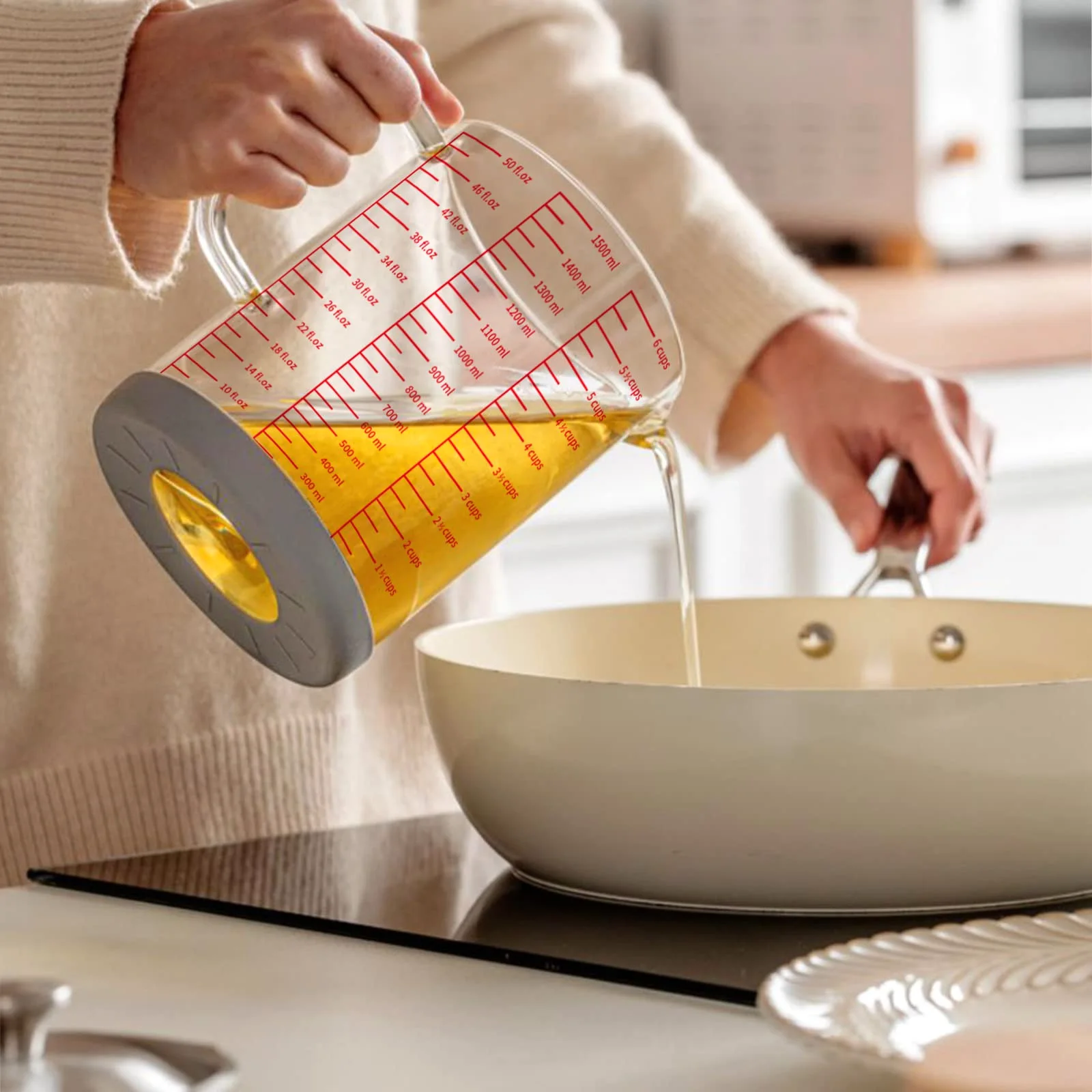
There are two versions. The glass keeper holds 1.5 liters (50 oz), and you can see how much fat is left at a glance. The steel keeper holds 2 liters (68 oz), is made of 304 stainless steel and stands on a coaster tray that catches drips. Its best fill is 7 cups, and it holds 8 when full.
| Version | Capacity | Strainer | Extras |
|---|---|---|---|
| Glass | 1.5 L (50 oz) | Fine mesh | Lid, V spout, see-through body |
| 304 stainless steel | 2 L (68 oz), 7 cups best fill | Fine mesh, 5.3 in across | Lid, V spout, coaster tray, 5.9 x 5.9 x 7 in |
Keep it covered and cold
Bacon is a cured meat, and Virginia Cooperative Extension notes that cured meats tend to become rancid when exposed to air. Keeping the fat covered limits that air. A keeper with a lid does that job better than a coffee mug by the stove.
If you will use the fat within days, the keeper can sit near the stove with its lid on. If you fry bacon only now and then, keep the keeper in the fridge. The fat firms up there, so give it a few minutes on the counter before you pour.
We do not give a storage time for bacon fat. Public storage charts list raw and cooked bacon, but not the fat rendered from it, and a guessed number would read like a rule. Trust your nose instead. Fat that smells sharp or stale has turned, and it goes in the trash, not the drain.
Pan drippings are a different case. Drippings that still hold meat juice and browned bits are closer to leftovers than to clean fat. USDA FSIS says leftovers must be refrigerated within 2 hours of cooking, so chill drippings within that window. Our guide to storing leftovers in glass covers the fridge and freezer side.
Cooking with it again
Strained bacon fat tastes of the bacon it came from. Use it where you would reach for oil or butter, a spoonful at a time.
- Fry eggs in a spoonful of it.
- Toss potatoes or Brussels sprouts in it before roasting.
- Soften onions in it for a soup or a pot of beans.
- Grease a skillet for cornbread.
- Fry yesterday's rice with a little of it.
Roasting in fat from the keeper
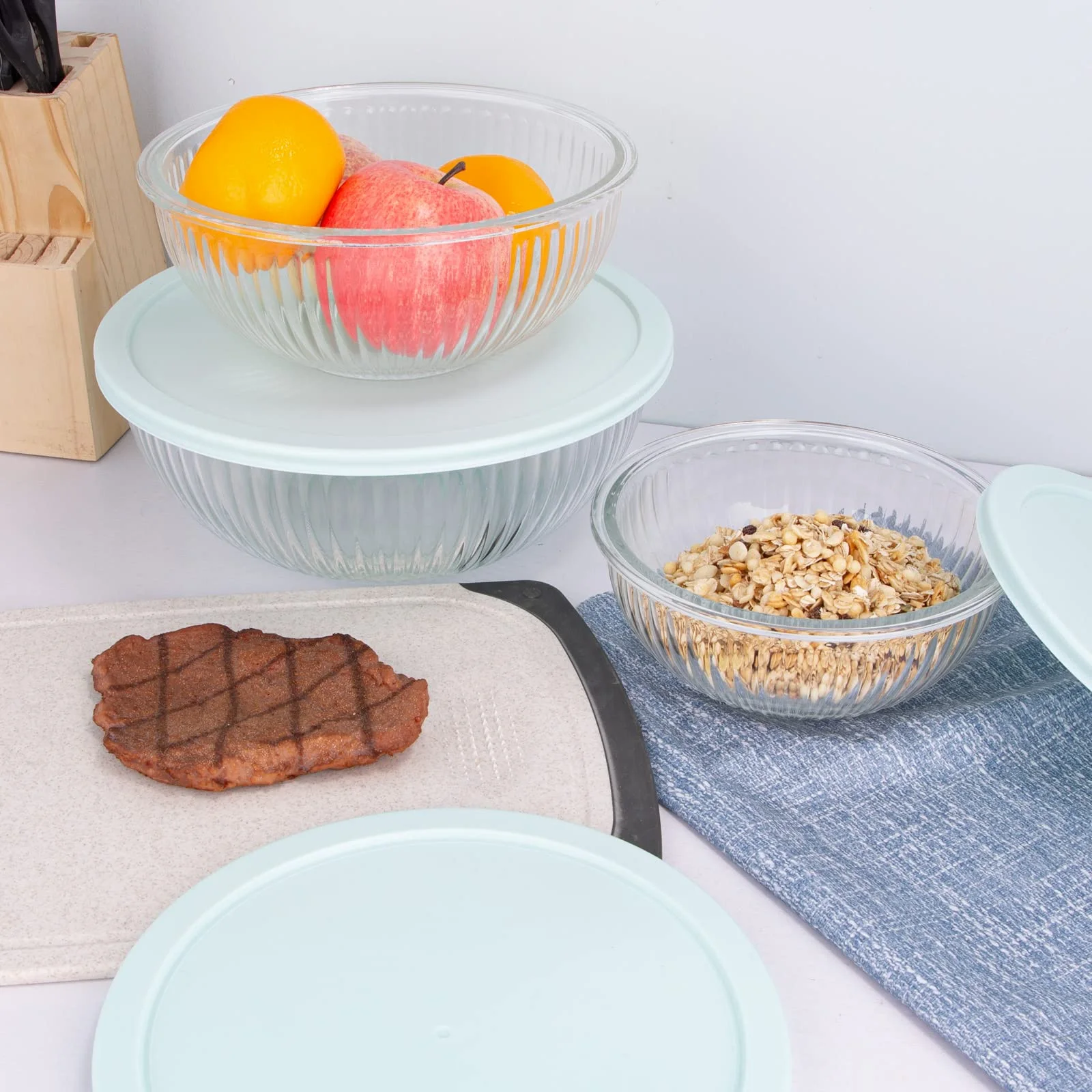
Roasted vegetables are where bacon fat earns its keep. Our glass casserole dish comes as a 2.8 liter ribbed oval or a 2.4 liter round. Toss the potatoes in the fat right in the dish, spread them out and bake. The glass lid holds the steam in at the start, and you take it off for a browned top.
Pour from the V spout of the keeper rather than dipping a spoon into it. A spoon dipped in and out carries crumbs and drops of water back into the fat, and the fat in the keeper stays clean only if nothing goes in but strained fat.
The dish carries leftovers to the fridge with its lid on. Just remember that it is not for a stovetop burner or an induction plate, so fry the bacon in a skillet and save the dish for the oven.
Throwing grease away without a clog
Sooner or later the keeper fills up, or a batch turns. NYC DEP names three handy containers for grease you are getting rid of: a frozen juice container, a beverage carton or a take-out container. Let the grease cool, pour it in, close the container and put it in the trash.
NYC DEP also suggests a second way. Put cooled cooking oil or grease in a plastic bag and freeze it before you throw it out.
The last film of grease on the pan counts too. NYC DEP advises using paper towels to wipe residual grease or oil off dishes, pots and pans before you wash them. Wipe the skillet, then take it to the sink.
The EPA list names butter as well. So the melted butter left in the warmers after a seafood dinner goes the same way, into a carton and not down the sink. Our guide to a crab and lobster night at home has that table from start to cleanup.
When you clean the keeper itself, wash the mesh by hand and do not leave it soaking for long.
| What you have | Where it goes | Who says so |
|---|---|---|
| Strained bacon fat you will cook with | A lidded keeper, in the fridge if you will not use it within days | Virginia Cooperative Extension on air and cured meats |
| Pan drippings with meat juice | The fridge within 2 hours | USDA FSIS, for leftovers |
| Grease you are throwing away | A juice container, a carton, a take-out box or a frozen bag, then the trash | NYC DEP |
| A film of grease on a pan | A paper towel before the sink | NYC DEP |
| Any grease, oil or butter | Never the drain | EPA |
Every product named here is part of Luvan kitchenware.