Key points
- USDA FSIS says to refrigerate leftovers within 2 hours, or 1 hour above 90°F.
- Leftovers keep 3 to 4 days in the fridge and 3 to 4 months in the freezer, per FSIS.
- Split big batches into shallow containers so they cool faster.
- Reheat to 165°F, vent the lid in the microwave and let the food stand 3 minutes.
The two-hour clock starts when you serve
USDA FSIS sets the first rule for leftovers. Refrigerate them within 2 hours of cooking, or within 2 hours of taking them out of an appliance that kept them warm. When the air is over 90°F, such as at an outdoor picnic in summer, FSIS cuts that to 1 hour. The clock keeps running while dinner sits on the table and while you clear up, so set the containers out before you sit down.
Big pots are the slow part. A full pot of chili stays warm in the middle long after the edges cool. FSIS advises you to divide large amounts of food into shallow containers, and two medium containers cool faster than one deep one.
Our large glass storage containers come two to a pack, 1520 ml (52 oz) each. That splits a batch of chili or a tray of roasted vegetables into two portions. One goes in the fridge for the week, and the other goes in the freezer for later.
How long leftovers keep in the fridge and freezer
FSIS says leftovers can be kept in the refrigerator for 3 to 4 days or frozen for 3 to 4 months. FoodSafety.gov, run by the Department of Health and Human Services, gives the same 3 to 4 days for soups and stews with vegetables or meat added. For the freezer, it gives those soups and stews 2 to 3 months.
The freezer numbers are about taste and texture. FoodSafety.gov says its freezer guidelines are for quality only, and that food stored continuously at 0°F (-18°C) or below can be kept indefinitely. A stew frozen for a year will be dry and dull, so the dates still help you. The fridge times are the ones to take seriously.
Both charts assume your appliances run cold enough. FoodSafety.gov builds its chart around a refrigerator at 40°F (4°C) or below and a freezer at 0°F (-18°C) or below. An appliance thermometer on a middle shelf tells you whether yours is there.
Glass helps with the counting. You see what is inside without lifting the lid, so the lasagna at the back does not hide until day six. Write the date on a strip of tape on the lid when the food goes in, and move older containers to the front.
| Food | Refrigerator | Freezer | Source |
|---|---|---|---|
| Leftovers in general | 3 to 4 days | 3 to 4 months | USDA FSIS |
| Soups and stews, vegetables or meat added | 3 to 4 days | 2 to 3 months | FoodSafety.gov |
| Appliance temperature | 40°F (4°C) or below | 0°F (-18°C) or below | FoodSafety.gov |
Lids, clips and room to expand
FSIS asks you to cover leftovers, wrap them in airtight packaging or seal them in storage containers. A cover keeps food from drying out, and it keeps the smell of last night's curry away from the butter.
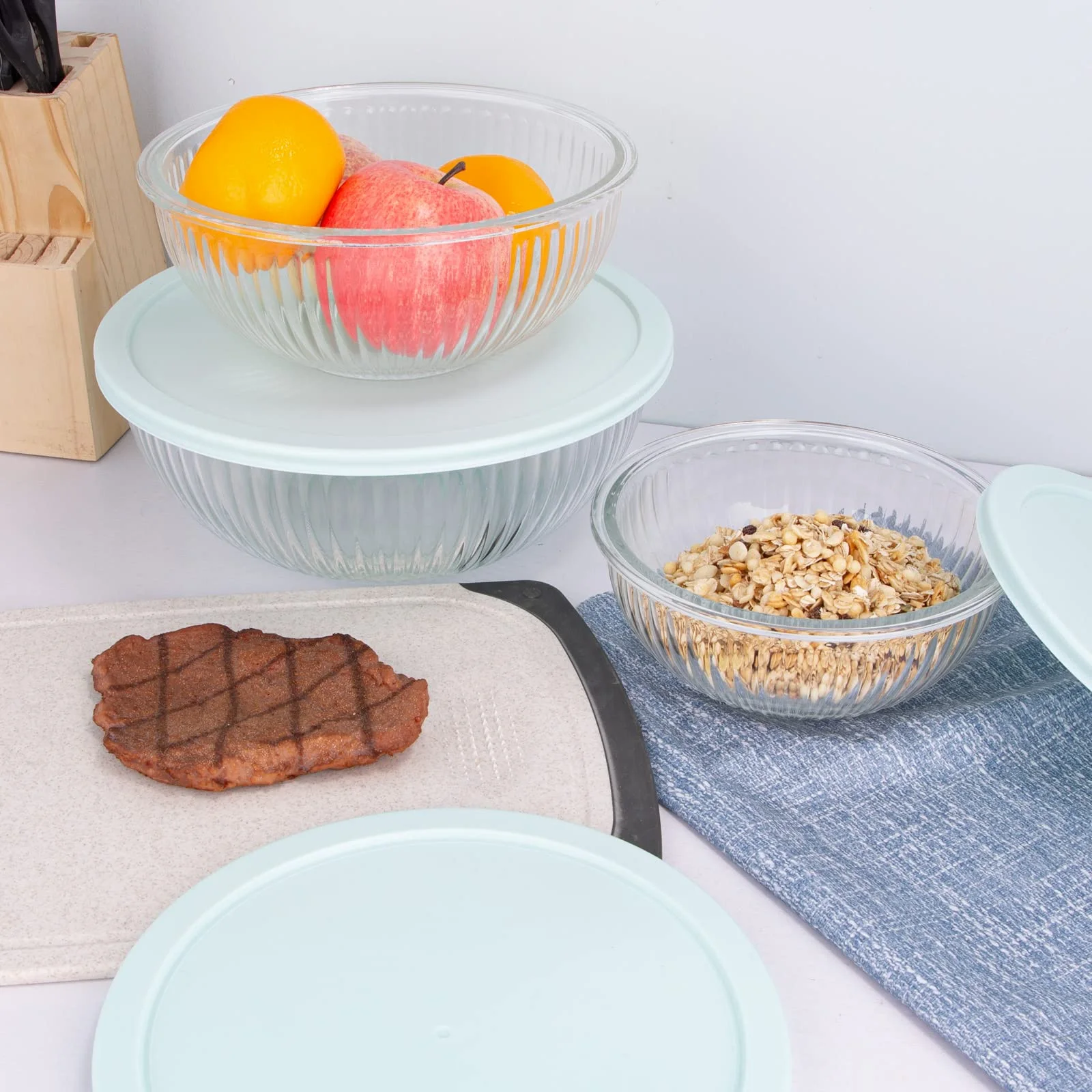
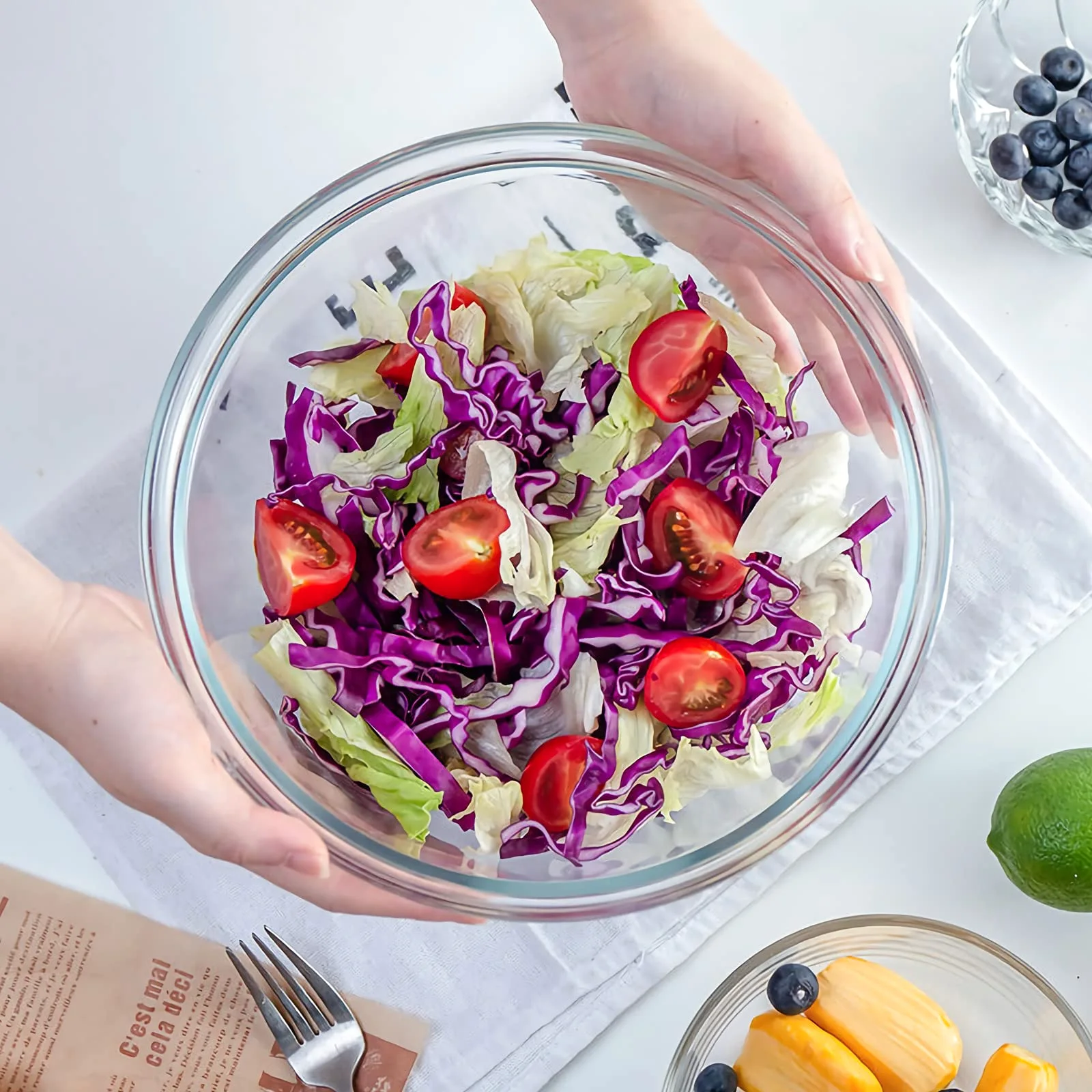
The lids of our storage containers snap down on four sides over a sealing ring. The lids of our glass mixing bowls are polypropylene with two inner clips, so push both clips fully into place. If a bowl lid feels tight after a long spell in the cupboard, soak it in hot water for 3 to 5 minutes and press it on while it is warm.
Soup and sauce grow as they freeze, and a container filled to the brim has nowhere for that extra volume to go. Leave a little room at the top. Fill to just below the rim, chill the container in the fridge, then move it to the freezer once it is cold.
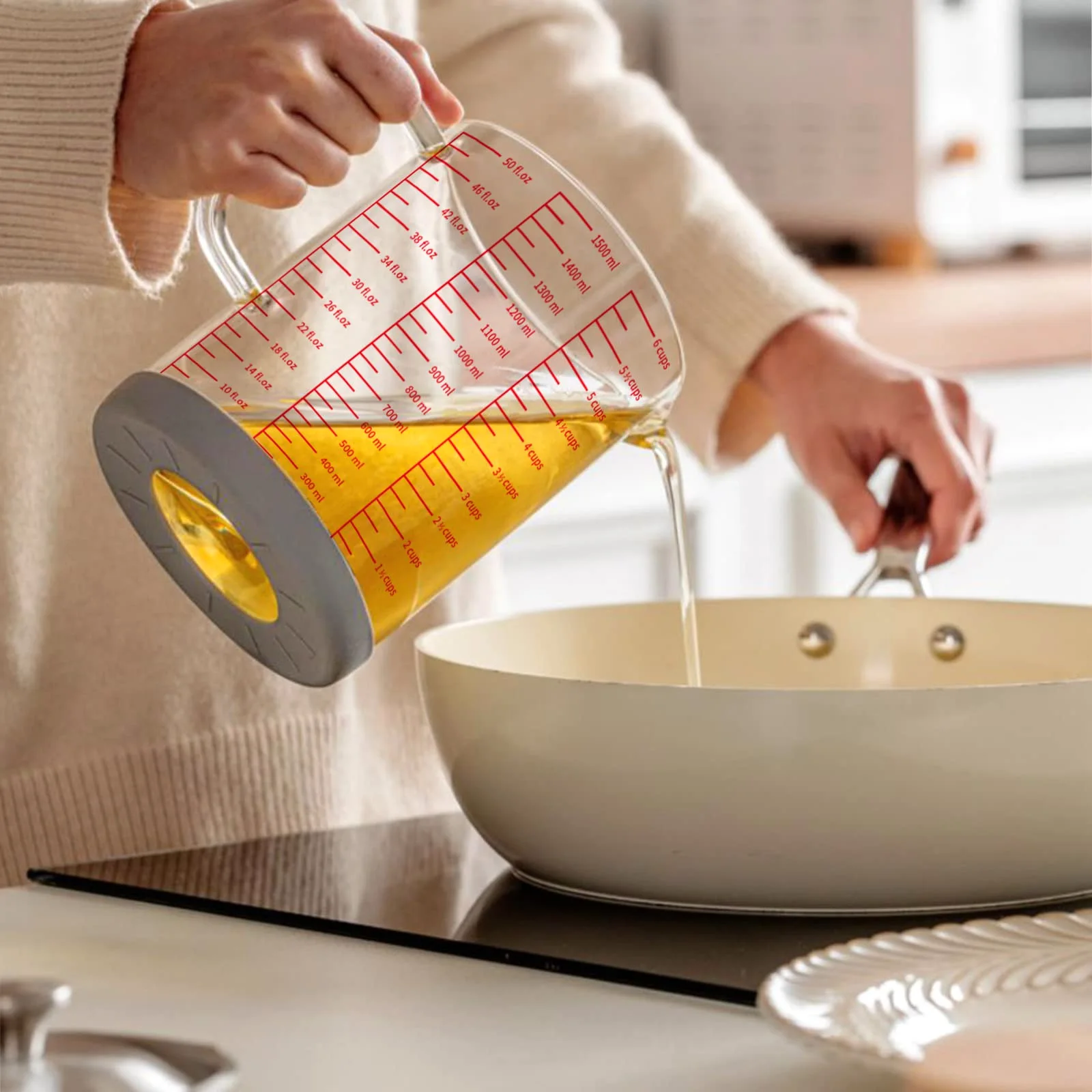
If you portion soup by the cup, our guide on reading a glass measuring cup lays out cups, ounces and milliliters side by side.
Reheating in glass
When you reheat leftovers, FSIS says they should reach 165°F as measured with a food thermometer. Push the probe into the thickest part of the dish, where heat arrives last.
In the microwave, FSIS lists heatproof glass among the containers that are safe to use. It lists cold storage containers, such as margarine tubs and yogurt cartons, among those that are not. Food that came home in a takeout tub belongs in a glass dish before it heats.
FSIS also tells you to arrange food evenly in a covered glass or ceramic dish and to add some liquid if needed. Loosen or vent the lid so steam can escape. Stir, rotate or turn the food midway through. Once it comes out, let it stand for at least 3 minutes before you take its temperature.
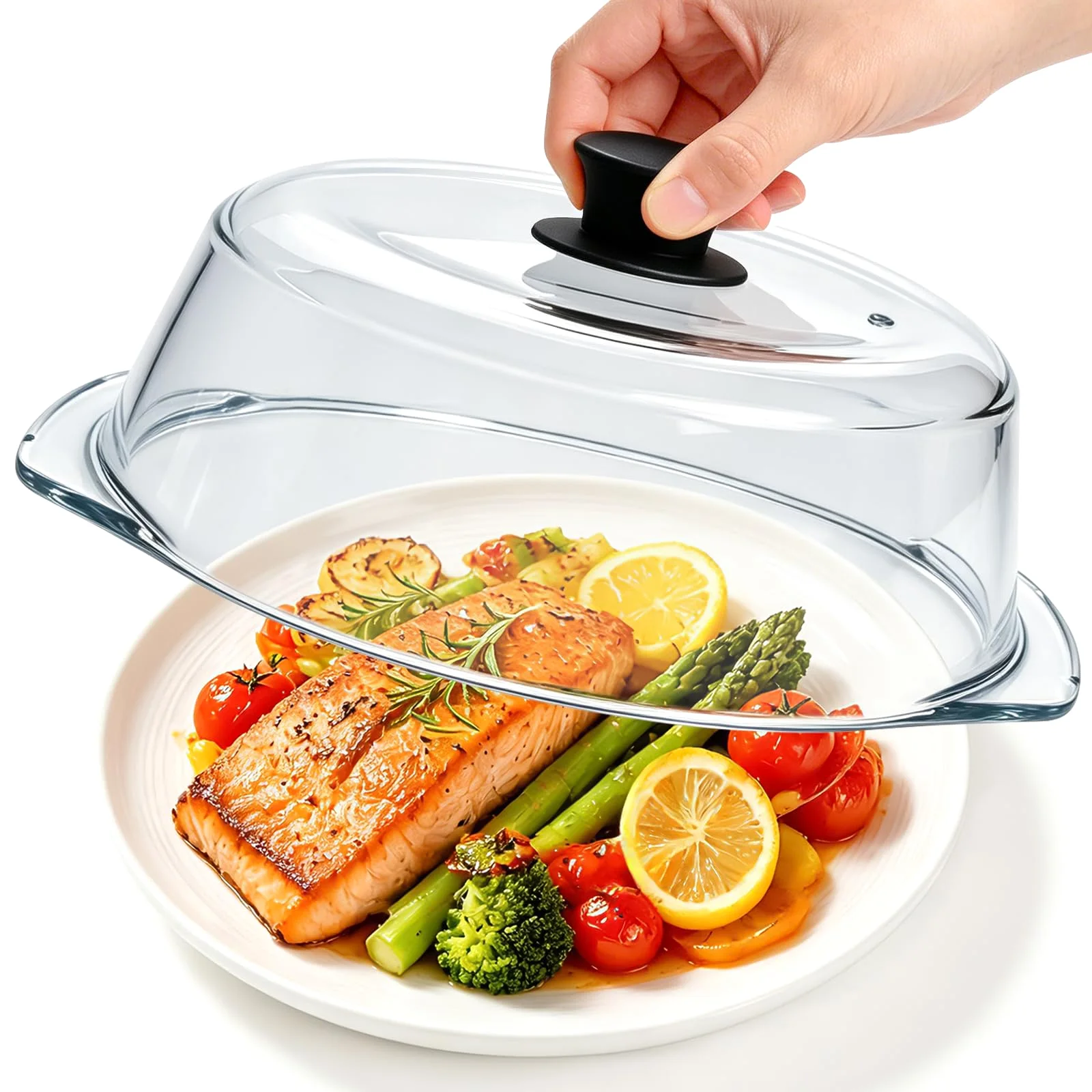
On our storage containers, lift one latch before the microwave so steam has a way out. Our bowl lids come off for the microwave and the oven. For a plate, our glass splatter cover is a 10-inch dome of 5.2 mm glass with a steam vent, so it covers the food and lets the steam out at the same time.
From the oven to the fridge in one dish
A casserole is the easiest leftover of all, because it never changes containers. Our glass casserole dish comes as a 2.8 liter (3 quart) ribbed oval or a 2.4 liter (2.5 quart) round, both with a glass lid. You bake with the lid on, serve at the table and put the dish in the fridge with the lid back on.
Two cautions come with it. Do not put the dish into a hot oven empty or frozen, so thaw frozen leftovers in the fridge before they go back in. It is also not for a stovetop burner or an induction plate.
Our containers and bowls go into a preheated oven only with their plastic lids off. When they are empty, the bowls of each set nest into one stack. You can see every piece side by side on glass bakeware and storage.
| Piece | Size | Fridge and freezer | Microwave | Oven |
|---|---|---|---|---|
| Large glass storage containers | 2 x 1520 ml (52 oz) | Yes | Yes, one latch lifted | Yes, lid off |
| Glass mixing bowls | 0.2 to 4.5 qt by set | Yes | Yes, lid off | Yes, lid off |
| Glass casserole dish | 2.4 L round or 2.8 L oval | Yes | Yes | Yes, never empty or frozen |
Every product named here is part of the Luvan collection.