Key points
- Set a cracker, a fork, a sheller and a butter warmer at each place before the seafood comes out.
- Melt the butter first and pour it into the warmers. The tealight keeps it warm, it does not melt a cold block.
- The U.S. Fire Administration says to keep candles at least 12 inches from anything that burns.
- Leftover butter goes in a container for the trash, not down the drain, as the EPA and NYC DEP advise.
Set every place before the crab comes out
Crab and lobster are eaten with your hands, so every guest needs the same kit within reach: something to crack with, something to pull the meat out with, and butter of their own. Shared tools mean waiting. Shared butter means four hands in one bowl in the middle of the table. Set each place first, then bring out the platter.
Our 33-piece crab crackers and tools set is built around a table of four. It has 4 die-cast zinc alloy crackers, 4 stainless steel forks, 4 plastic lobster shellers and 4 ceramic butter warmers, plus a pair of stainless seafood scissors and 14 tealights. One cracker, one fork, one sheller and one warmer go at each place. The scissors stay with whoever is serving.
Put a large empty bowl in the middle for shells, and a roll of paper towels at the end of the table. Shells pile up fast, and a bowl within reach keeps them off the plates.
| Piece | How many | What it does |
|---|---|---|
| Crab leg cracker, die-cast zinc alloy | 4 | Opens crab legs and claws, and walnuts and pecans |
| Fork, stainless steel | 4 | Pulls the meat out of a cracked leg |
| Lobster sheller, plastic | 4 | Splits a lobster leg along its length |
| Ceramic butter warmer | 4 | Keeps melted butter warm over a tealight |
| Seafood scissors, stainless steel | 1 | Cuts shells, and down the back of a shrimp |
| Tealights | 14 | For the butter warmers |
Cracking crab legs and splitting lobster
Crack a crab leg at the joint or across the middle with a firm, short squeeze. Squeeze too hard and the shell crushes into the meat, and you spend the next minute picking out splinters. Once the shell gives, turn the leg and draw the meat out with the fork, ideally in one piece.
Lobster legs are thinner, and the sheller is the quicker tool for them. Run it along the length of the leg to split it open, then lift the meat out. Crack a lobster claw with the cracker, the same way you would a crab claw. The scissors take care of any shell the cracker cannot get a grip on.
When the seafood season ends, the crackers stay useful. They open walnuts and pecans just as well, so the set earns its place in the drawer between seafood nights.
Shrimp on the side
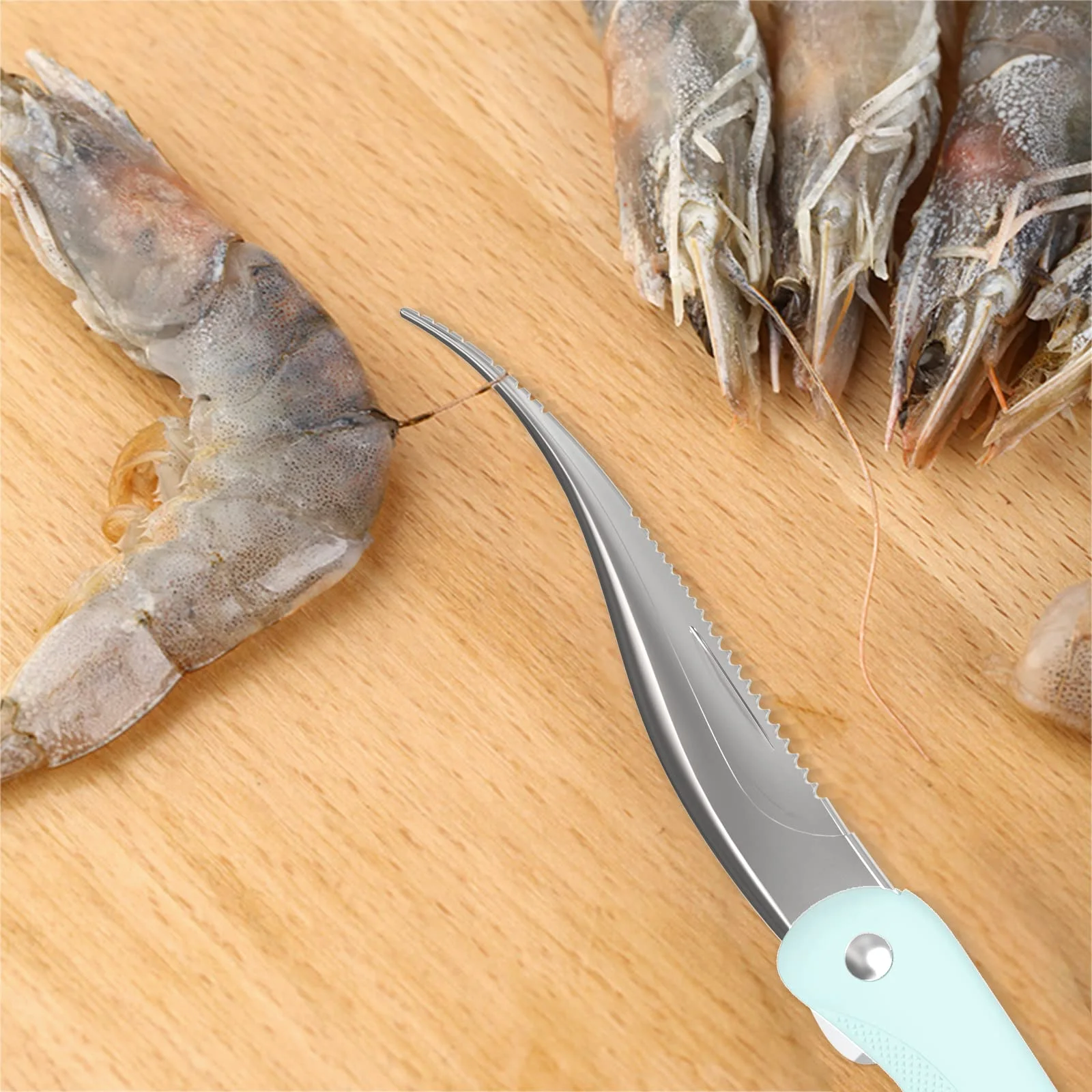
Plenty of seafood nights put shrimp on the table too, in a boil or as scampi. Peeling and deveining them is the slow part of the prep, and it happens before your guests arrive. Our shrimp deveiner has a curved, serrated stainless steel blade that follows the back of the shrimp. Hold the shrimp belly down, slide the tip under the shell at the head end and push along the back. The shell splits and the vein lifts out in the same pass.
Rinse each shrimp under cold water as you go. When you finish, wash the tool, press the small paddle at the joint and fold the blade into the handle. Open, it is 9.37 inches long. Folded, it is 5.04 inches, short enough for a drawer or a picnic box.
Warm butter at every place
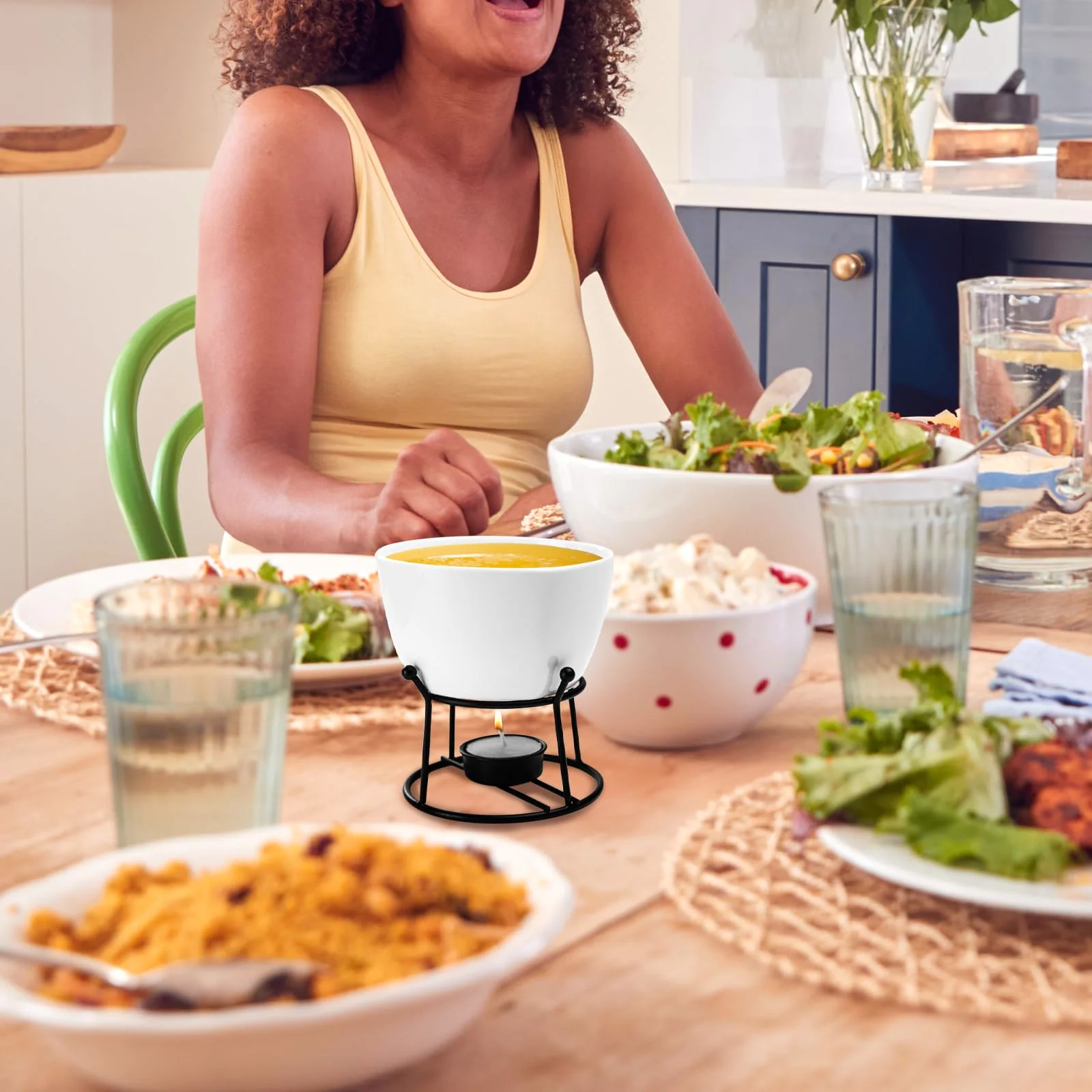
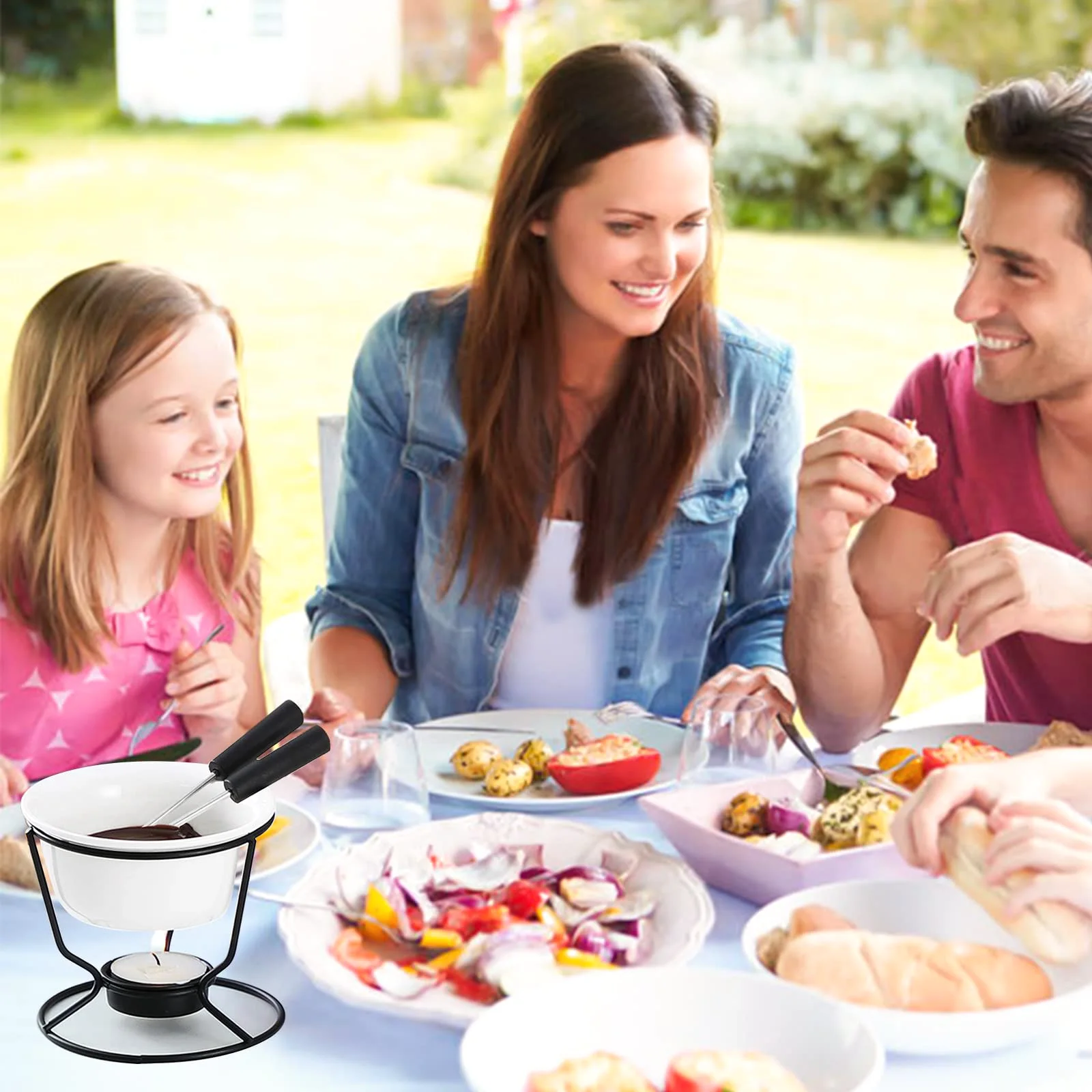
Melted butter thickens as it cools, and over a long dinner it cools quickly. A warmer at each place keeps it liquid from the first leg to the last. Our butter warmers come four to a set. Each is a ceramic cup on a metal stand with a tealight underneath, and every set has 20 tealights in the box.
Melt the butter first, on the stove or in the microwave, and then pour it into the cups. The tealight keeps melted butter warm. It is not there to melt a cold block. The ceramic cups go in the oven, the microwave and the dishwasher, but the metal stands do not.
Pick the size by how much your guests dip. The 4 oz rounds hold butter for one plate of crab legs. The large 14.2 oz cups take a seafood boil where everyone keeps going back, or a pot of chocolate for strawberries after the shells are cleared.
| Size | Shape | Stand | Good for |
|---|---|---|---|
| 4 oz | White round, 3.54 in across | Silver | Butter for one plate of crab legs |
| 5 oz | Round | Black | Butter or a small cheese dip |
| 7 oz | Square | Metal | Butter, chocolate or cheese |
| 14.2 oz | Large cup | Metal | A seafood boil or chocolate fondue |
Candles at the table
Every warmer has a small open flame under it, and a seafood table is full of things that burn: napkins, paper towels, a paper tablecloth. The U.S. Fire Administration says to keep candles at least 12 inches away from anything that burns. It also says to use stable holders and to place them where they cannot be knocked down easily.
At a dinner where everyone reaches across the table for the next leg, that second rule matters. Set each warmer on a flat, heat-safe spot right in front of its guest. Keep it away from the edge, and away from the path between two people and the platter.
The same page, citing the National Fire Protection Association, says that on average 20 home candle fires are reported each day. It also says to blow out candles when you leave a room. A short routine covers the evening.
- Warmers on a flat, heat-safe surface, one in front of each guest.
- Napkins, paper towels and the tablecloth edge at least 12 inches from each flame, as the U.S. Fire Administration advises.
- Butter for small children in a cup with no candle under it.
- Every tealight blown out before the table is cleared, and before anyone heads to the sofa.
Cleaning up: shells, butter and the drain
The end of a seafood night leaves a bowl of shells, four cups of leftover butter and greasy plates. The butter is the part to think about. In its advice on caring for a septic system, the EPA says not to pour grease down the drain, and butter is on its list along with fats, wax, cheese and heavy cream. The NYC Department of Environmental Protection says grease poured down a kitchen sink can cling to the inside of your household plumbing.
Let the leftover butter cool in the cups, then scrape it into a container you will throw away. NYC DEP suggests a frozen juice container, a beverage carton or a take-out container. It also suggests putting cooled grease in a plastic bag and freezing it before it goes out. Wipe the cups and plates with paper towels before they go in the sink, which NYC DEP recommends for dishes, pots and pans.
Once the cups are wiped, they go in the dishwasher, and the metal stands get a wipe by hand. If you also cook with bacon, our guide on what to do with bacon grease goes through keeping fat out of the drain every day of the week. Every warmer and seafood tool in our range sits together on the butter warmers and seafood tools shelf.
Every product named here is part of the Luvan lineup.